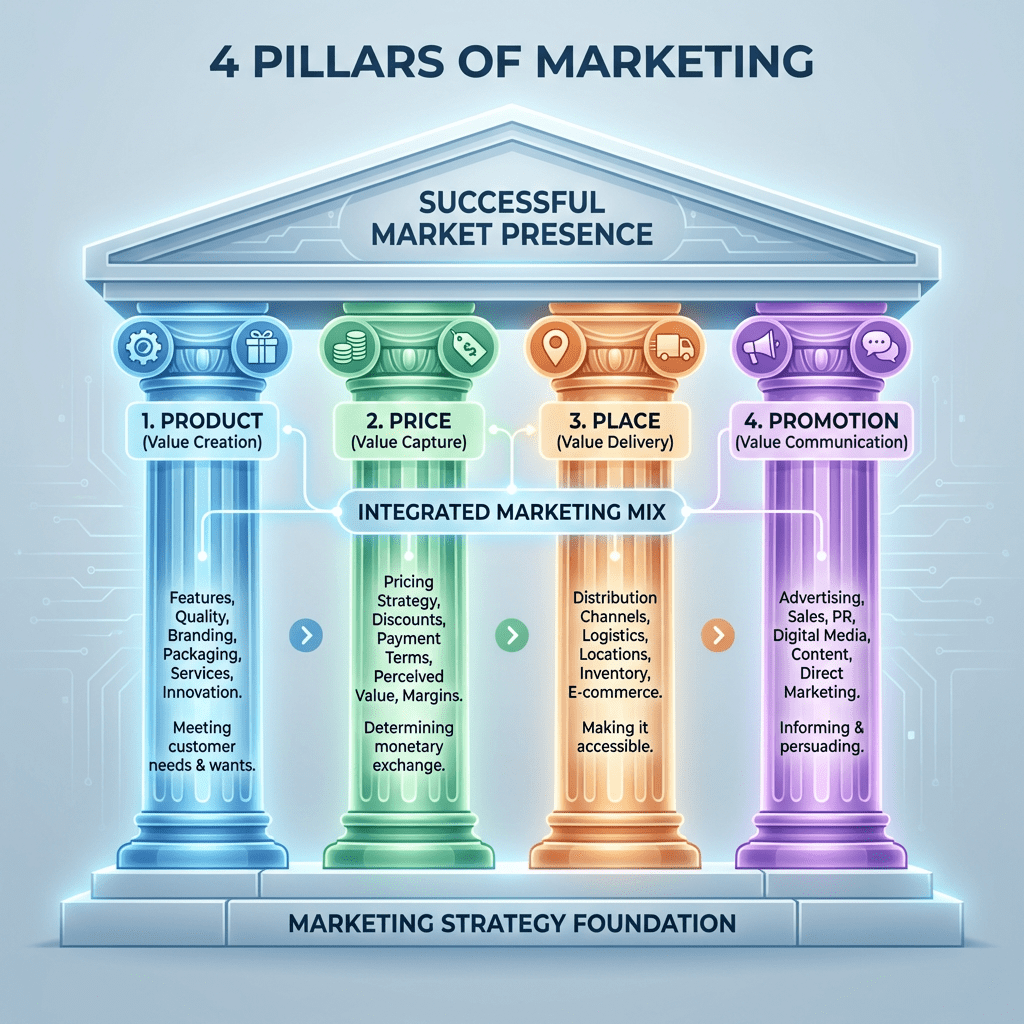
Introduction to Strategic Brand Management
Welcome to my Strategic Brand Management blog. This blog will be used throughout the MKT-400 course to explore how companies build, manage, and grow strong brands. Each post will examine different brands and analyze the strategies they use to create brand identity, connect with customers, and strengthen brand equity.
1-3 Student Blog: Analyze How Brands Apply the Marketing Mix (4P’s) to a Brand

Week 1 Blog-Kurt Hodges
Title: How Different Brands Use the 4P’s to Build Brand Strength
When we think about successful brands, it’s easy to focus on the logo or the products they sell. But strong brands are built through strategy, and one of the most important tools marketers use is the marketing mix, also known as the 4P’s: product, price, place, and promotion. These elements help companies shape how customers see their brand and ultimately build brand equity over time. Looking at brands in different stages of their life cycle helps show how these strategies evolve.
Rivian is a great example of a brand in the introduction stage. Rivian is an electric vehicle company that focuses heavily on adventure and outdoor lifestyles. Their main products are electric trucks and SUVs designed for people who enjoy exploring, camping, and traveling off-road. This gives Rivian a clear product identity that separates it from many other EV companies. Their pricing also places them in the premium category, which helps reinforce the idea that the vehicles are high quality and technologically advanced. Rivian sells its vehicles primarily through a direct-to-consumer model rather than traditional dealerships, which is becoming more common with newer automotive brands. In terms of promotion, Rivian focuses on storytelling around sustainability, adventure, and innovation. These marketing efforts help introduce the brand and start building recognition in a competitive industry.
Tesla represents a brand that is firmly in the growth stage. Over the past decade Tesla has grown rapidly and helped push electric vehicles into the mainstream market. Tesla’s product strategy focuses on high-performance electric vehicles combined with advanced technology such as autopilot capabilities and over-the-air software updates. The company’s pricing has historically been premium, but Tesla has gradually introduced more affordable models to reach a wider audience. Tesla also sells directly to customers through its website and company-owned showrooms, which allows the company to maintain more control over the buying experience. Promotion for Tesla is somewhat unique because the brand generates massive attention through innovation, media coverage, and the influence of CEO Elon Musk. Rather than relying heavily on traditional advertising, Tesla often benefits from word-of-mouth and social media visibility.
Ford represents a brand in the maturity stage of the brand life cycle. As one of the oldest and most recognizable automotive companies in the world, Ford has built strong brand equity over more than a century. Ford’s product strategy includes a wide range of vehicles, from trucks and SUVs to electric models like the F-150 Lightning and Mustang Mach-E. This allows the brand to appeal to multiple customer segments. Ford’s pricing strategy also varies widely depending on the vehicle type, allowing them to reach both budget-conscious buyers and premium truck customers. In terms of place, Ford uses a traditional dealership network that spans across the country and globally. Their promotion often focuses on themes like durability, reliability, and American heritage, especially with vehicles like the F-150 which has been one of the best-selling trucks in the United States for decades.
Looking at these three brands together shows how the 4P’s can be applied differently depending on where a brand is in its life cycle. Newer brands like Rivian focus on building awareness and creating a unique identity. Growing brands like Tesla expand their reach and continue to innovate. Established brands like Ford focus on maintaining trust, adapting to new technologies, and protecting the brand equity they have built over time.
References
Ford Motor Company. (2024). Ford vehicles and innovation. https://www.ford.com
Rivian Automotive, Inc. (2024). Electric adventure vehicles. https://rivian.com
Tesla, Inc. (2024). Electric vehicles, energy, and innovation. https://www.tesla.com
Title: When Brand Positioning Backfires: Tesla’s Cybertruck Window Demonstration
Blog-Kurt Hodges
One of the most important parts of building a strong brand is making sure the company clearly shows what makes it different from competitors. Companies spend a lot of time trying to stand out in their market. They also have to make sure they still meet the basic expectations customers have for that type of product. When this balance is done well, it helps strengthen the brand. When it goes wrong, it can create problems very quickly.
A good example of this happened when Tesla revealed the Cybertruck in 2019. Tesla has built a reputation for being innovative and pushing the limits of what vehicles can do. The Cybertruck was designed to look very different from traditional trucks and was marketed as extremely tough and durable. During the live launch event, Elon Musk wanted to show just how strong the truck’s windows were. He explained that the Cybertruck used special armored glass that was supposed to be very resistant to damage.
To prove this, a metal ball was thrown at the window during the presentation. Instead of holding up the way everyone expected, the glass cracked. Musk even joked on stage that it was not supposed to happen. The moment was captured on video and quickly spread across the internet and news outlets.
This situation is a good example of how brand positioning can sometimes backfire. Tesla was trying to show that the Cybertruck was stronger and tougher than other trucks. That was supposed to be one of the things that made it different. When the window cracked, it created a moment that seemed to challenge that claim. Even though it was just one demonstration, it still affected how people viewed the launch.
At the same time, Tesla’s overall brand was strong enough to recover quickly. The clip actually generated a lot of attention for the Cybertruck. In some ways it even helped people remember the launch event more. Still, it shows how important it is for companies to be careful when making bold claims about their products.
Brand managers have to think carefully about how their product demonstrations and marketing messages support the image they want customers to see. When everything lines up, it strengthens the brand. When something goes wrong, it can spread quickly and affect how people think about the company.
Below is the moment from the Cybertruck reveal where the window demonstration didn’t go as planned.
References
CNBC. (2019, November 22). Tesla Cybertruck reveal: Window demonstration fails during launch event [Video]. YouTube. https://www.youtube.com/watch?v=udxR5rBq_Vg
Tesla. (2019). Cybertruck. https://www.tesla.com/cybertruck
Wheeler, A., & Meyerson, R. (2024). Designing brand identity: A comprehensive guide to the world of brands and branding (6th ed.). John Wiley & Sons.
When Ethics Break a Brand: The Case of Nike
Blog-Kurt Hodges
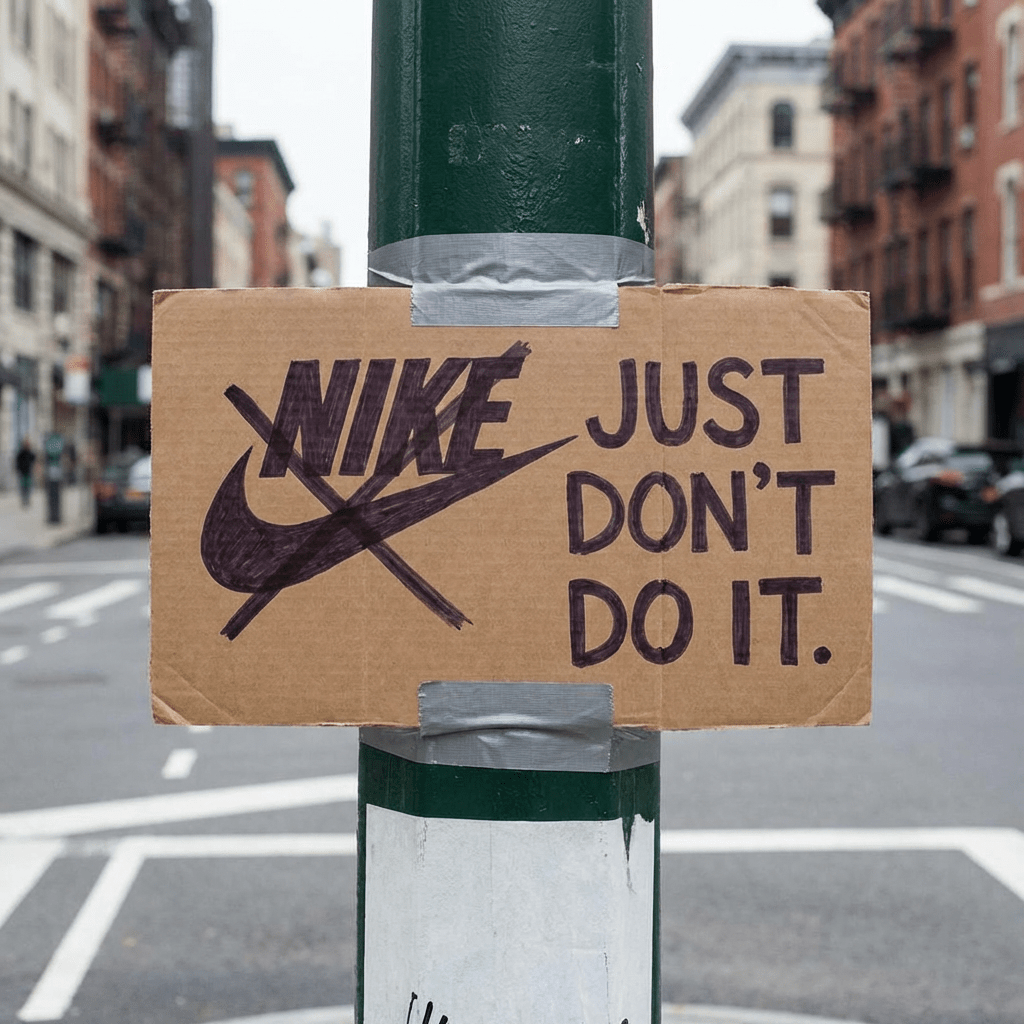
IIn 1996, a Life magazine photo showed a 12-year-old boy in Pakistan stitching a Nike soccer ball. That image became one of the most damaging moments in Nike’s brand history, not because of what the company made, but because of how it was made. It’s a reminder that a brand isn’t just a logo or a slogan. It’s everything a company does, including the parts it would rather keep quiet.
Nike built its identity around performance, inspiration, and the idea that sport can change lives. “Just Do It” is one of the most recognized slogans in history. But through the 1990s, investigative reports kept surfacing about the conditions inside Nike’s overseas factories including low wages, excessive hours, and unsafe environments. That gap between the brand’s image and its reality was impossible to ignore. As Wheeler and Meyerson (2024) point out, brand identity has to be backed by action, not just messaging. When those two things don’t match, trust erodes fast.
And it did. Nike went from being a symbol of athletic achievement to being a symbol of corporate exploitation, at least in the eyes of a growing number of consumers, advocacy groups, and journalists. People started boycotting. Campus protests broke out. Phil Knight even acknowledged in a 1998 speech that “the Nike product has become synonymous with slave wages.” That’s a painful thing for any brand leader to say out loud. Research on unethical brand behavior suggests these situations create what’s called a spillover effect, meaning the damage doesn’t stay contained to one issue and bleeds into how people feel about the brand as a whole (When Brands Behave Badly, n.d.).
The engagement shift was real. Some consumers walked away entirely. Others stayed but became more skeptical and vocal. What makes this especially interesting to think about now is how much faster this would have spread in a social media era. In the 1990s, it still took time for the backlash to build. Today, a video or a leaked report can reshape public perception overnight.
Nike didn’t disappear though. That part of the story matters too. Over the following decade, the company invested heavily in supplier standards, corporate responsibility reporting, and sustainability initiatives. It wasn’t a quick fix and it took years of consistent effort before consumer sentiment meaningfully shifted. Wheeler and Meyerson (2024) describe brand management as a long-term commitment, and Nike’s recovery is a good example of what that actually looks like in practice.
Still, the situation raises a fair question: what should Nike have done differently? A few things stand out to me. First, ethical standards should have been part of supplier contracts from day one, not something addressed after the press started asking questions. Second, Nike’s internal brand culture didn’t seem to be reinforcing the values the company was selling externally. When employees and leadership aren’t aligned around shared values, it shows. Third, transparency earlier on could have changed the entire narrative. Brands that get ahead of problems almost always fare better than those that react after being exposed.
Nike’s story is a useful one because it doesn’t have a clean ending, it has a complicated and ongoing one. The brand survived, but it had to earn back trust it never should have lost. For anyone studying marketing, that’s probably the most honest lesson here: ethics aren’t a PR strategy. They’re the foundation the brand is built on, and when that foundation cracks, everything above it is at risk.
References
Nike, Inc. (2024). Impact report. https://www.nike.com
Statista. (2023). Consumer attitudes toward ethical brands. https://www.statista.com
Wheeler, A., & Meyerson, R. (2024). Designing brand identity: A comprehensive guide to the world of brands and branding (6th ed.). John Wiley & Sons.



 Welcome to Kurt Talk